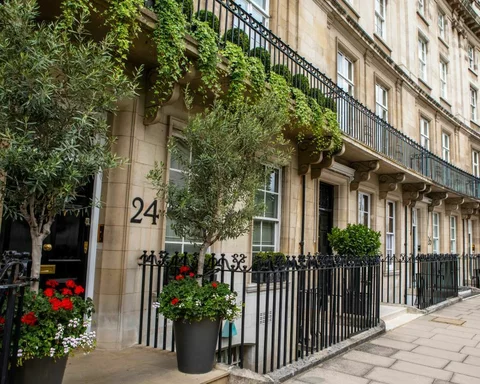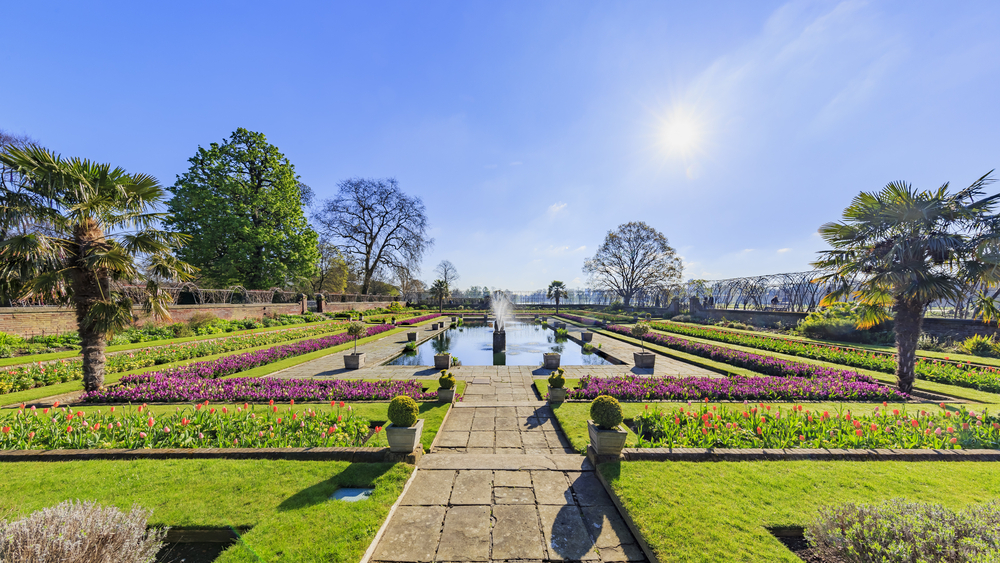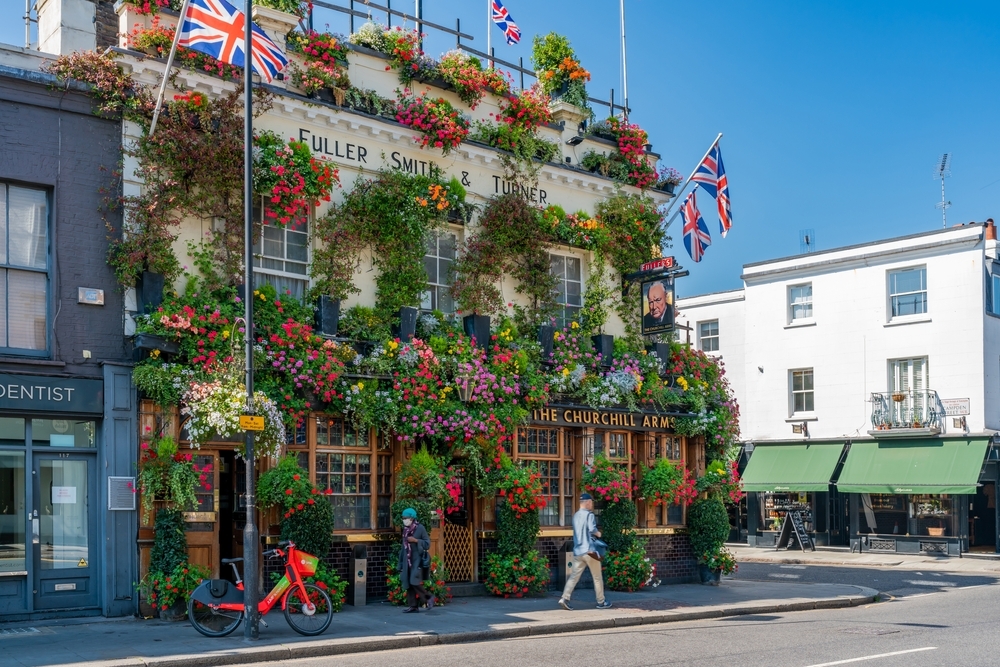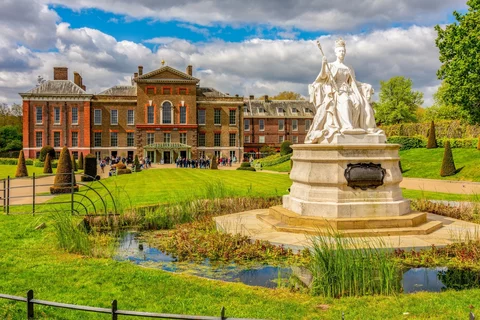
The west side of the city — Kensington, Chelsea and Holland Park — is where much of London’s most stable demand resides. Kensington’s broad avenues and garden squares, its proximity to Kensington Gardens and the Royal Albert Hall, and a concentration of excellent schools make it a natural choice for families. Period houses, discreet mews and mansion flats create architectural variety within a compact area. Chelsea, though more outwardly cosmopolitan, retains its essential village character. The King’s Road and Sloane Square give it retail and social energy, while quiet backstreets and riverside walks keep it liveable. Holland Park has always been quieter — larger houses, wide leafy streets, and access to one of London’s most beautiful parks make it particularly attractive to families and international buyers seeking space and privacy.
To the north, Notting Hill has evolved from artistic enclave to one of London’s most desirable residential districts. Its appeal lies in its mix: colourful terraces and stucco façades around communal gardens, independent shops along Westbourne Grove, and easy access to both Kensington and the parkland of Holland Park. Despite its global recognition, it retains a strong local identity and sense of community.
The central and southern districts — Knightsbridge, Belgravia, Pimlico and Westminster — represent London’s classic core. Knightsbridge combines prestige and practicality, offering some of the capital’s most valuable properties in garden squares and new developments near Hyde Park. Harrods and Harvey Nichols remain its anchors, but the area is as much about discretion as glamour. Belgravia, laid out in white stucco crescents and squares by Thomas Cubitt, is one of London’s most coherent and elegant neighbourhoods. It is prized for its quiet streets, embassy presence and enduring sense of privacy. To the south, Pimlico offers similar architecture on a smaller scale — handsome Regency terraces, elegant squares, and a slightly less formal air — while Westminster places residents amid the landmarks of British history. Behind the institutions lie attractive mansion blocks and modern riverside apartments that provide exceptional central access.
Moving north again, Marylebone is one of the few districts in central London that feels genuinely self-contained. Centred on Marylebone High Street, it balances period housing, independent retail and cultural institutions such as the Wallace Collection. It has become a model of the “urban village” — intimate, well connected, and deeply lived-in. To the west, Bayswater borders Hyde Park and has benefitted from ongoing renewal. Its stucco terraces and mansion blocks now attract buyers seeking proximity to the park, excellent transport via Paddington and the Elizabeth Line, and access to neighbouring Notting Hill and Kensington. Earls Court, by contrast, is a story of transition. Long seen as secondary, it is being redefined by large-scale regeneration, bringing new development and energy to an area with good housing stock and established connections.