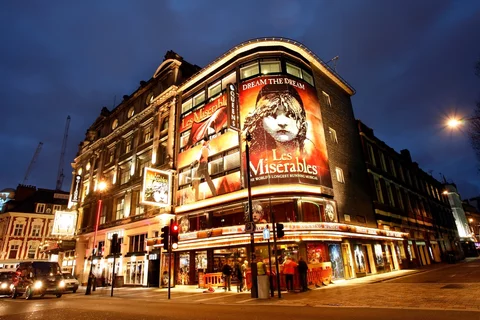
At its centre, Soho remains one of London’s most distinctive quarters. Once a magnet for artists and performers, today it is a hub for film, music and media companies, with independent restaurants and small theatres tucked between Georgian façades. Despite its compact scale and commercial buzz, it retains pockets of calm around Soho Square, where historic houses and mews properties have been sensitively converted. The character is authentic and urban, appealing to those who value proximity and personality over space.
Bordering it to the west, Mayfair represents the other side of West End living — grand, measured and deeply established. Its symmetry of squares, such as Grosvenor Square, Berkeley Square and Hanover Square, anchors some of London’s most valuable residential streets. Behind the elegant façades are embassies, galleries and private clubs, while Bond Street defines luxury retail for the capital. With Hyde Park and Green Park framing the district, it offers the rare combination of tranquillity and position that has made it a benchmark for London property for over two centuries.
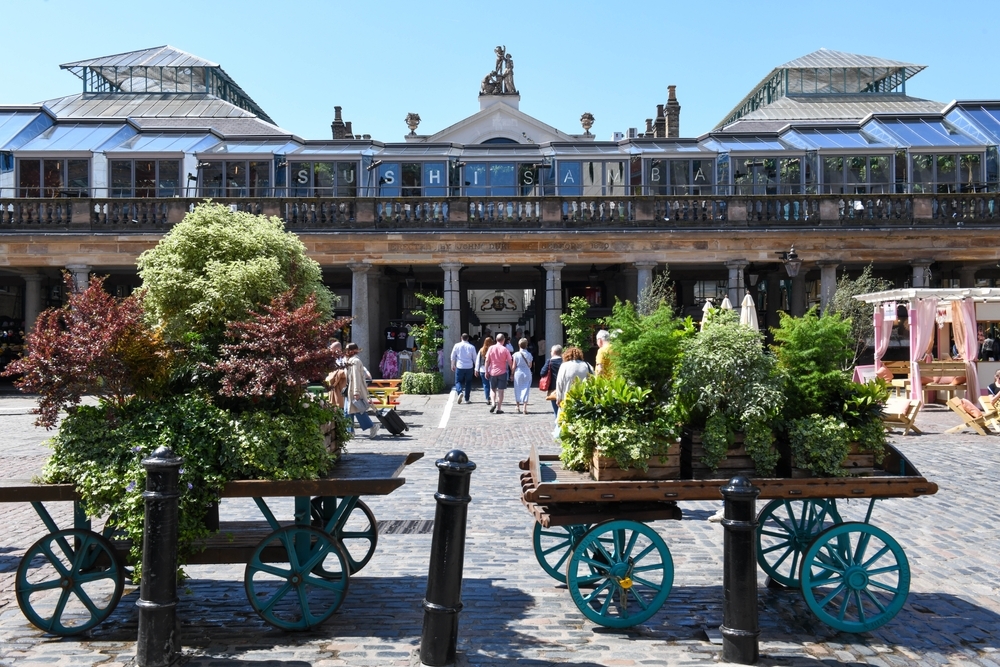
To the east, Covent Garden has evolved from a working market into one of the city’s best-known cultural and retail destinations. The Royal Opera House and Theatre Royal Drury Lane lend it global prestige, while its cobbled piazza and covered market preserve much of its 19th-century fabric. Above the shops and arcades, apartments in converted warehouses or former townhouses offer characterful living in the middle of the capital’s theatreland. The surrounding Seven Dials retains an older London charm, with narrow lanes, small boutiques and an intimate atmosphere.
North of Oxford Street, Fitzrovia provides a quieter counterpoint to the more commercial parts of the West End. Its network of Georgian streets has long attracted writers, architects and academics, with Charlotte Street known for its restaurants and galleries. Fitzroy Square, designed by Robert Adam, remains one of London’s finest residential squares. The area’s combination of period houses, mansion blocks and newer apartments makes it one of central London’s most liveable and balanced neighbourhoods.