The mood music in the London property market is not good. We hear the story repeated daily: overvalued property, exodus of the wealthy chased away by a smorgasbord of taxes, sky high building costs, suffocating landlord regulation and, always, stamp duty. Journalists compete to add to this list as it makes a good copy. And much of it is true but, as always, a bit of granularity can paint a slightly different picture.
There are plenty of buyers - but they are keenly aware that the market has come off over 20% since 2014. But most sellers believe that it’s other people’s houses that have fallen - not theirs. It is remarkable how quickly things sell, with competition, if the price is right. One of the problems is that in prime central London many sellers own multiple properties either in the UK or abroad. We hear too many conversations which go along the lines of, ‘unless we get what our house is worth, we’ll hang on until the market gets better.’ On the first point, their assumption is that it’s worth what someone told them ten years ago and on the second that the market is going back to the halcyon days of rock-bottom interest rates and governments that welcomed the wealthy. One is plain wrong and the other, at best, questionable. The result? A market burdened with overpriced property. But if you really want to sell at today’s prices, the market is just fine.
It also depends on the London market you are talking about. Prime central London is a different beast from the areas slightly further out - think Hammersmith, Clapham, Hackney or Queen’s Park - areas that you could classify as ‘domestic’ rather than ‘international’, where the buyers and sellers are there for the long term and don't have either the wealth, need or inclination to move elsewhere. The crucial difference in this domestic market is that sellers tend to be buyers as well; if they sell for less, then they know that they can buy for less. As they need somewhere to live, sitting on their hands and waiting for the market to improve isn’t an option.
This shows prices in some outer areas since 2023.
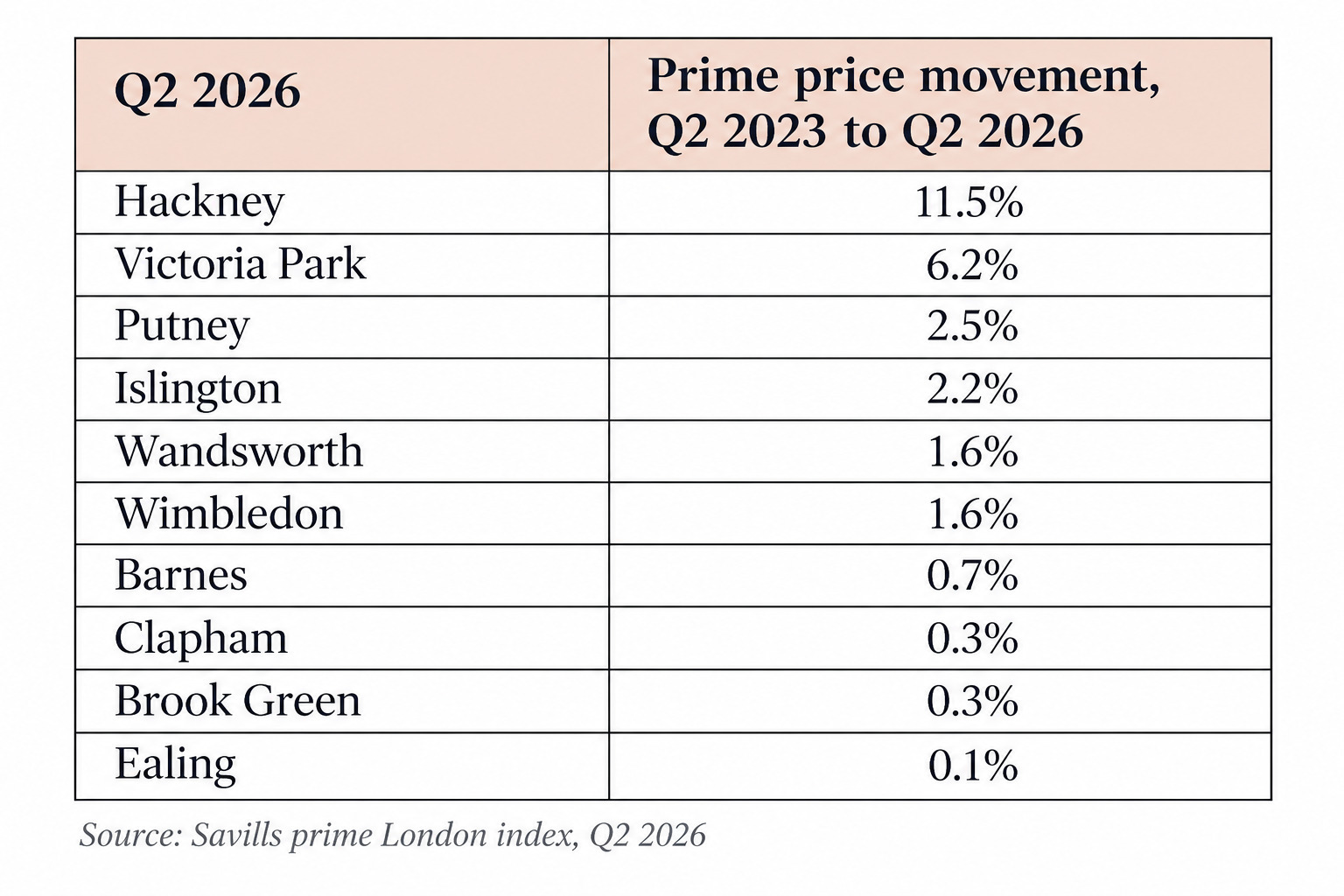

That Hackney would be so popular is not something that most people would have forecast twenty years ago, and it illustrates a generational change. Younger buyers are choosing to live eastward because, surprise, surprise, their friends live there - and unless they are hedgies or trustafarians, they can’t afford Chelsea. Though cheap, it isn’t: £1,400 to £1,600 a square foot is now the norm rather than the exception. That growth is also reflected in who’s buying; 76% of buyers across north and east London are now under 40, rising to 91% in Hackney. This is a generational shift in where people want to live, not a market being carried by a handful of outliers.
Most of the comments above about London apply to the country market as well - sellers wanting yesterday’s price encouraged by agents desperate to get an instruction, discretionary buyers kicking the tyres and not committing - but often competitive bidding on the rare occasion where a good house meets a sensible asking price.

An additional challenge in the country is that, in the very nature of the houses - outbuildings, gardens, historic listings, septic tanks or water supplies for instance - there is more grit that finds its way into the transaction. A particular one that affects any house out on its own is the sewage system. An old septic tank and soak-away that has done good service for centuries will be a flashing red light on any mortgage provider’s screen and lead to a £25k bill to make it ‘better’. The threat of housebuilding around any town and many villages has caused many a deal to fall through even though it is only on a plan and unlikely to get built at all. Mortgage providers (them again) are digging (metaphorically) into the legal weeds of water supplies. Are those easements agreed when Queen Victoria was ruling an empire still fit for purpose? It can often feel as if finding the house and negotiating a deal that suits everyone is just the amuse bouche in a very long meal….
We have been through tough markets before, but normally they were focused on a crisis that turned out in the end to be just a blip in a steadily rising property market. Rising markets create their own momentum amongst both buyers and sellers, and both are inclined to ‘take a view’ on detail. The steady retreat in prices since 2014 is not in most adults’ life experience and the adjustment all round - not just for buyers and sellers but also, lawyers, valuers, lenders and surveyors - is an uncomfortable one. Instead of being an investment certainty everyone is having to adjust to houses being somewhere you live. The good news is that there seems to be the slight sound of a penny dropping and expectations becoming more aligned to the new reality.
As we said earlier, the market is a perfectly good one when prices reflect the new reality. Getting there is painful but ultimately people will have to get on with their lives. We are getting there - but it would be good if it was a bit faster.


